In this blog post, I reflect on what has been an eventful year with many happy events but also a few sad moments. In the new year, I intend to follow up with a new blog where I look at the year ahead, which has a few exciting changes and events in store. Keep tuned!
Contributions to the broader academic community
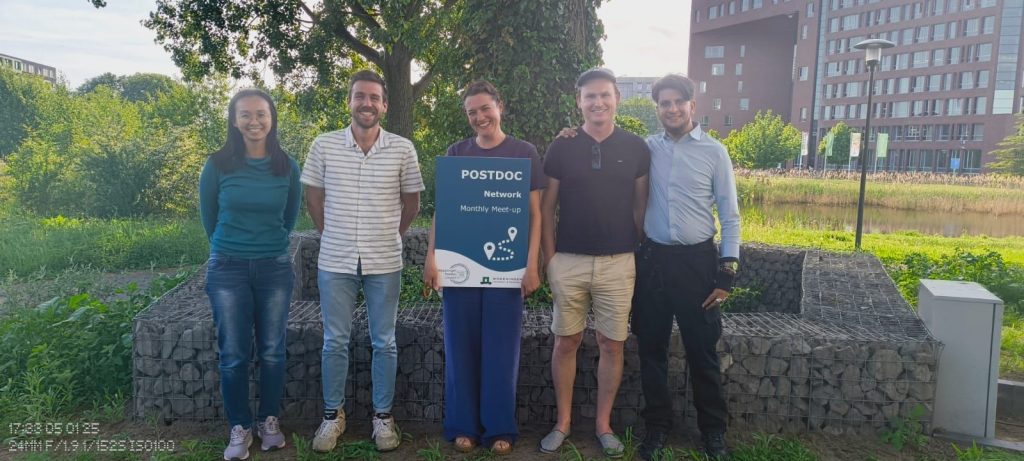
In February of this year, I joined Wageningen University’s Postdoc Council in the double role of Secretary and Communication Manager. Given the short-term duration of employment contracts, postdoctoral life is fundamentally a period of transition in which the Council can provide support, direction and companionship towards the next steps in a researcher’s career. This includes organizing events, being a point of contact and providing postdocs with relevant information and tools to further improve their period of work at the university. Aside from enjoying doing administrative tasks in supportive ways, another motivation to get on board of the Council was because I like to be active at different organizational levels and learn how institutions work from a different perspective. Together with other council members, we managed to accomplish a great amount of things in 2025 including: doubling our number of followers and presence on Intranet, LinkedIn, Bluesky and Viva Engage; conducting a survey among postdocs and publishing the report “2025 Survey Report on Postdoc Wellbeing at Wageningen University and Research”; organizing the Annual Postdoc Day; becoming a member of the National PostDocNL council; and organizing the end-of-the-year event (Christmas party). Although my own postdoc contract ends in two months, I am committed to further building and solidifying a home and hub that supports postdoctoral researchers at university.
As an editorial board member of the journal Tourism Geographies, I have an active role in the academic publication process and contribute to the production of podcasts. It was a pleasure to take on the role of handling editor for a number of publications that came out in the journal this year, including Adel Nikjoo’s article on “Tourism as a catalyst for socio-political change“, Leon Mach’s article on “Lifestyle migration and the emergence of ‘Airbnburbs’ in the Global South“, and “Space tourism and sustainable trajectory” by Sam Spector. It was great fun and very informative to interview the following scholars on their work for the Tourism Geographies podcast:
Nora Müller on “Decommodifying nature through commoning”

Cristina Trifan and Claudia Dolezal on “Digital voluntourism and sense of place”

Leon Mach on “Lifestyle migration and the emergence of ‘Airbnburbs’ in the Global South”

Stefen MacAskill and Susanna Becken on “Geographies of hotel guest electricity, water and gas consumption”

Mentoring and development of others and self
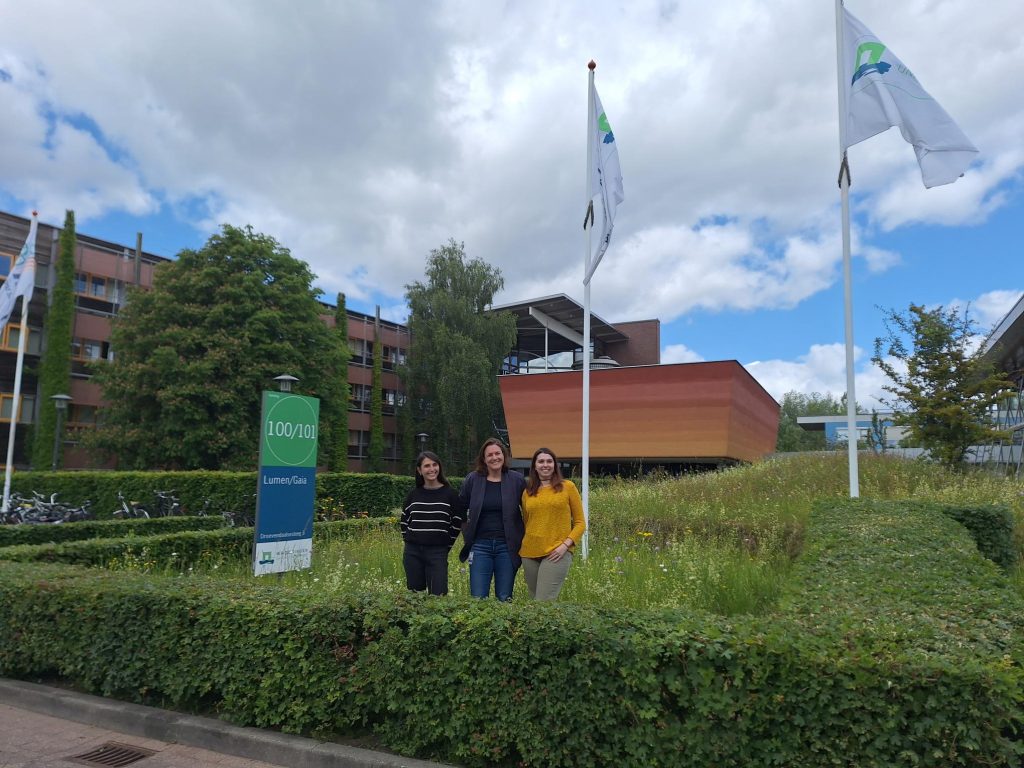
Considering a postdoc position mostly entails doing research, 2025 has been an active year for me in terms of mentorship, supervision and self-development as an educator. In the first half of the year, I had the pleasure of working more closely with two external PhD candidates who both paid a visit to Wageningen University: Anna Khorlachenkov from the University of Bologna (Italy) and Mar Alsina Folch from Universitat Oberta de Catalunya (Spain). Anna’s PhD project is on the (self)representation of the Gitano community in Andalusian tourism, Mar’s PhD project is on workations and coworking spaces in rural areas. I act as an external advisor on Anna’s project, and during her 3-month visit in March, April and May, Anna made major advancements on her PhD writing. She also presented her work during the annual Cultural Geography PhD Day and engaged in other events organized by geography colleagues. Anna has been an active and appreciated member of the PhD community at GEO and has successfully applied for the Marco Polo fund to finance a second stay with us in 2026. While Anna has joined us more recently, Mar and I have been working together since 2022 on a project on short-term rent and Airbnb. The first results of our collaboration have been published in a chapter this year (see below). During Mar’s one week visit, we made a lot of progress on our data analysis, working in tandem, desk-to-desk in the GAIA building. We prepared the outline and findings sections of a manuscript that is now close to being submitted. This study provides an empirical account of the (de)valuation of service work and social reproductive labour in the platform economy of tourism.
In addition to mentoring PhD researchers this year, I acted as mid-term examiner of Eleanora Rossi’s PhD thesis on the “Precariousness of Workers in Hospitality Spaces” at Örebro University, Sweden. While I have examined PhD theses before, the Swedish mid-term examination process was new to me and meant delivering a presentation myself on the submitted examination materials before actually co-examining with a big team of colleagues in the Human Geography department. This format was a wonderful way of building a dialogue with the PhD candidate and other assessors, ensuring that what you have read and interpreted in the PhD thesis corresponded with what the candidate had in mind. Eleanora is working on a wonderful and societally pressing research topic and I wish her all the best toward completion. With special thanks to Susanna Heldt Kassel, Tara Duncan, Maria Thulemark and Natasha Webster for making this an unforgettable stay and examination process.
In 2025, I supervised and mentored Jente Baron, who successfully completed her BSc in Tourism, a joint degree that Wageningen University offers together with Breda University of Applied Sciences. Jente’s thesis concerned “Resident Perceptions in Tourism Planning” in the context of Madrid, Spain. Pursuing the same degree in tourism, I also supervised and mentored Sam van Dorst who wrote and successfully defended her thesis on “Resident participation in tourism planning in ‘de Veluwe’”. Last but not least, I had the pleasure of supervising Vaia Pitaskou who successfully completed her MSc thesis in Land Use Planning at Wageningen University on “Gender inclusiveness in public spaces”. Using a comparative analysis of two parks in Amsterdam, Sarphatipark and Oosterpark, Vaia’s thesis explored the concept of spatial justice from women’s perspectives to understand how urban parks’ design can mitigate gender inequality and create public spaces that are more inclusive for women.
To spruce up my PhD supervision skills, I participated in and completed the course Professional in PhD Supervision, offered by the Wageningen University Graduate Schools. The 3-day course focussed on communications styles, coaching formats, leadership, cultural issues, distance-based supervision, and writing moments. I learned a lot about doctoral degree regulations and policy in place at Wageningen University, and about my peers’ experiences as co-supervisors on dynamic and international supervisory teams.
Grant income and future work
While applying for grant income has always occupied a major part of my workload as a researcher on a temporary contract, the Dutch government’s unprecedented budget cuts imposed on higher education in these last two years have put new pressures on postdocs to secure funding to remain in academia. Given that the offer of new and ongoing contracts are becoming a rarity, especially in certain research fields, external funding is seen as one of the few means to stay on board. In 2025, the amount of grant applications submitted definitely outdid preceding years, but with mixed results and, unfortunately, none of them will fund a full-time or ongoing position. Some of the rejected applications that I contributed to include: the German DFG Scientific Networks to fund a research network on “Touristic Governmobilities: Power, Mobility, Justice” led by Sarah Becklake and Elisabeth Sommerlad; the Dutch NWO NWA Digital Technology and Work programme to fund a consortium on “Digital Technologies and Decent Futures for Essential Work” led by Karin Astrid Siegmann; the 2026 Unusual Collaborations (UCo) programme, which would fund a last year of research on our ongoing interdisciplinary project “Clean future: Wellbeing in “dirty work”’.
On the positive side, two funding applications did get granted in 2025 and will ensure my participation in research projects in the upcoming years, at least infrastructurally. These include a project on Twin transitions and polycrisis in tourist spaces (TWINTUR), financed by the Spanish Plan Estatal de Investigación Científica y Técnica y de Innovación 2024-2027. The application process was led by Lluís Garay Tamajon and Francesc González Reverte of the NOUTUR group at the Universitat Oberta de Catalunya (my former employer). I was invited to give an opening seminar about this project last November (see below) together with Raoul Bianchi. Another granted application was the 2025 Erasmus+ Staff Mobility for Teaching Grant, which financed my two-week stay at Umeå University, in Sweden. More about that wonderful visit below. In the pipeline are still the following applications: the Dutch NWO Open Technology Programme for my ongoing research on Virtual Reality in Education; the Mondriaanfonds Kunstenaar Project with our CUCO team and artist Luuk Smits; and finally the Wageningen University Strategic Plan 2025-2028 application for an interdepartmental project on “Governing Limits to Tourism Growth and Sustainable Alternatives”. Fingers crossed!
Research- and teaching exchanges
There have been a few research and teaching exchanges this year, some of which I already mentioned above (Anna and Mar’s visit to Wageningen University). Here are some other highlights that I want to mention:
The 2025 Erasmus+ Staff Mobility for Teaching Grant funded a 2-week stay at Institutionen för geografi vid Umeå universitet, where I was so warmly welcomed and introduced to the department’s degree programmes, research projects and social life. I feel very privileged to have had the opportunity to develop lectures and teach in the Tourism and Planning courses and to engage with an enthusiastic group of MSc students. I also met with PhD candidates Amrei Aubrunner, Ekaterina Kovbas, Hampus Hallingfors, Petrus Garefelt and Elias Rossinen who took the time to share their exciting PhD projects with me. There was so much to learn from their approaches and methodologies in the fields of energy transition and tourism, second homes, geography education and labour; inspiration that I will take forward in my future research projects! During my stay in Sweden, I paid a brief visit to Östersund University, the ETOUR Research Centre, where I was hosted by Kristina Zampoukos, Lusine Margaryan Solène Prince and Dimitri Ioannides. There I presented a newly published chapter on “Tourism and Home” (see the publications below). I am very thankful for their engagement and feedback that I am taking forward in future projects on the intricate relation between tourism and home. During my stay at Umeå, I was hosted by Cenk Demiroğlu who took the job of hosting to the letter. I felt privileged to get a view on the city and the university that I am sure is exceptional. We chased Umeå’s aurora skies many times over and we enjoyed the city nightlife in the excellent company of Pamela Bachmann-Vargas. I will surely miss the daily fika and sky-lit morning walks to the office. And there is much more to come back for, ice-hockey and this tantalizing puzzle of Iceland in the fika room.
Many other department members contributed to the success of this teaching exchange at Umeå. But it was especially Dieter Müller who inspired and supported my trip in the first place. Dieter and I met several times at various conferences over the years, and I contributed a chapter to The Routledge Handbook of Tourism Geographies that he edited together with Julie Wilson, my former colleague and much appreciated mentor at the Universitat Oberta de Catalunya. During my stay in Umeå I had the opportunity to get to know Dieter a little better and appreciated his dedication to my visit and intellectual engagement with my research, despite his many meetings those weeks. It was with shock that I learned about Dieter’s passing just a few days after I departed Sweden. Dieter will be sorely missed by many in the geography and tourism community, he was a warm, honest and remarkable person.
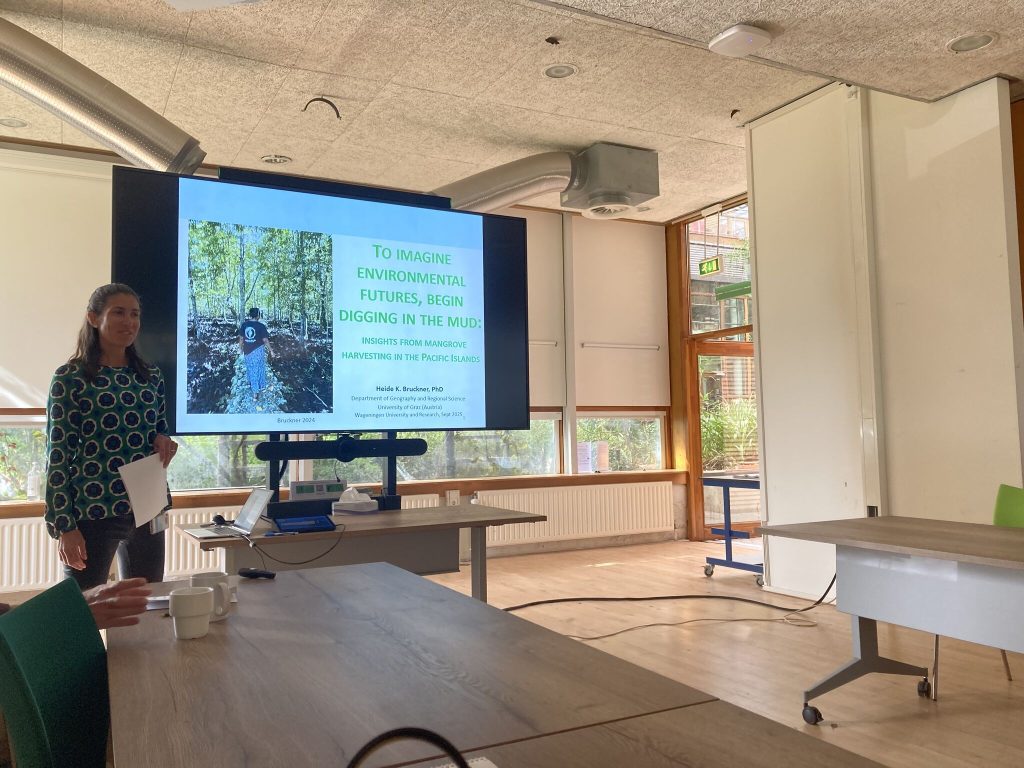
Another Erasmus+ Teaching Mobility grant ensured that we were able to host Heide Bruckner from the University of Graz for a week. During her stay, Heide led an intensive PhD workshop on researcher positionality in fieldwork. She also gave a Wageningen Geography Lecture entitled “To imagine just environmental futures, begin digging in the mud: insights from mangrove harvesting in the Pacific Islands”. In this talk, Heide centered the everyday experiences of women in the Solomon Islands harvesting food in mangrove forests. It was a pleasure to have Heide with us and to enjoy many walks and talks!
Research and its outcomes
A number of interrelated research projects have taken up most of my time in 2025, being:
Short-term rental housing, labour and activism. This is my primary postdoctoral project in which I explore how short-term rental (STR) platforms are transforming the organization and conditions of hospitality work and housework across European cities. I also examine what role platform users play in challenging and changing platforms’ unsustainable practices and policies. In doing so, this research contributes to existing debates on platform capitalism and highlight the role of platform users play in bringing about change from within platform corporations. While my research in this field is ongoing, I have published and presented some of the outcomes of this project this year.

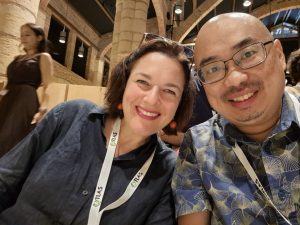
Together with Mar Alsina Folch, I gave a presentation at the ATLAS Annual Conference 2025 in Vila-seca in Spain. We spoke about our study “Hosting along with increasing restrictions: an ethnographic study of Airbnb hosts in Amsterdam and Barcelona”. We are currently drafting a manuscript, which will discuss how hosts deal with and resist restrictions imposed on their practices.
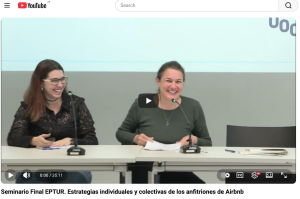
Again, with Mar, I presented a study on “Challenging Airbnb ‘from within’. A study of hosts’ individual 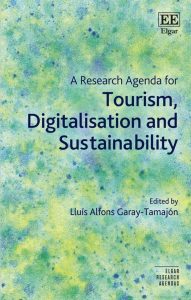 and collective strategies in Barcelona and Amsterdam” at the EPTUR project closing event at the Universitat Oberta de Catalunya. This study has now been published as a chapter in the book “A Research Agenda for Tourism, Digitalisation and Sustainability”, by Edward Elgar (edit. by Lluís Garay Tamajón).
Some of our key take-aways in the chapter:
- Platform users are critically aware of Airbnb’s business ethos and protocols and how these align with or contradict their own practices
- Hosts mention how Airbnb’s “culturally very American understanding of hospitality and cleaning” often does not match their own and how they work around it
- Many hosts accept the platform’s terms and conditions only to appropriate its infrastructure to their advantage while operating with their own values
The chapter is accessible here: https://doi.org/10.4337/9781035346011.00014
The presentation has been recorded and is visible here: https://www.youtube.com/watch?v=vCzbildMzkc
Another publication that Mar and I are currently working on in relation to my postdoc project focuses on the social- and economic expenses that are made among the providers of STR (i.e. hosts) to accommodate this labour vis-à-vis their other paid labour, care work and housework.
Similarly related to housing, housework and tourism is a chapter that was recently published in the 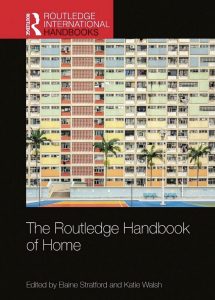 Routledge Handbook of Home. Edited by Elaine Stratford and Katie Walsh this impressive volume of 46 chapters rethinks home as a material, emotional, and geopolitical site, through a variety of perspectives. I had the pleasure of contributing a chapter on tourism and home. To explore how tourism and home have long articulated, contested, and transformed one another, the chapter (necessarily selectively) summarizes scholarship on:
🏘️ Histories of travel that shape(d) understandings of home as a nation.
🏘️ Associations between tourism-related work and the reproductive labour at home.
🏘️ The commodification of home and housework for touristic purposes.
🏘️ Holidays as spaces to perform idealized versions of home and family identities.
🏘️ Mobile forms of dwelling and dwelling in mobility
🏘️ Unhoming effects of tourism through, for example, land and resource grabbing, and climate change.
A link to the chapter can be found here: https://doi.org/10.4324/9781003374428-52
I have been invited to present this chapter on two different occasions: at the ETOUR Research Center at Mid-Sweden University, posted here: and at the Institute of Geography at Umeå University, Sweden, during my Erasmus+ Teaching Mobility Exchange.
In an invited seminar on “(Trans)national mobilities and the production of “short-term” cities” at the Gran Sasso Science Institute, Italy, I spoke about the role that short-term rental housing complexes play in the sustenance of ongoing housing crises and the related crisis of social reproduction. Thank you Uggo Rossi for inviting me and thank you Ilia Antenucci for being such a generous host!
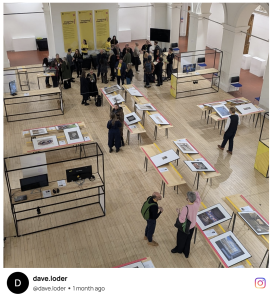
Digital mediations of home through short-term rental platforms. I work on this project together with Pau Obrador Pons who is the Principal Investigator (Northumbria University) and Dave Loder (University of Edinburgh). Funded through the BA/Leverhulme Small Research Grant. This year we completed all our data collection and analysis, which included 20 in-depth interviews with short-term rental hosts, and a visual-, discourse- and content analysis of 71 short-term rental home advertisements, including over 2500 images. Dave presented the first results of our work at the Imagining Interiors conference in Edinburgh, which took shape in the form of an installation of image-based speculations on imaginaries of home and domesticity emerging from short-term rental platforms. Dave used GenAI techniques to develop these from our collected data. More can be found here: https://imagining-interiors.eca.ed.ac.uk/

Clean futures: Wellbeing in Dirty Work. Together with Chih-Chen Trista Lin, I study the conditions of work in hotel housekeeping in the Netherlands. More about the project and our study can be found here: https://unusualcollaborations.ewuu.nl/unusual-collaborations/clean-future-wellbeing-in-dirty-work/ The project is part of and funded through the Centre of Unusual Collaborations, which “aim is to create a space that supports an interdisciplinary group of diverse young researchers to come together in unusual collaborations to address the most pressing challenges of the age”. I presented our study on worker perspectives on improving the conditions of housekeeping work in the Netherlands on two different occasions this year. The first at the Trendcongres Toerisme en Vrijetijd 2025 (held 20 March) at Breda University of Applied Sciences, the Netherlands. The second during an invited seminar at the Centre for Feminist Social Studies at Örebro University, Sweden. We hope to see our first publication in this project coming out in 2026.
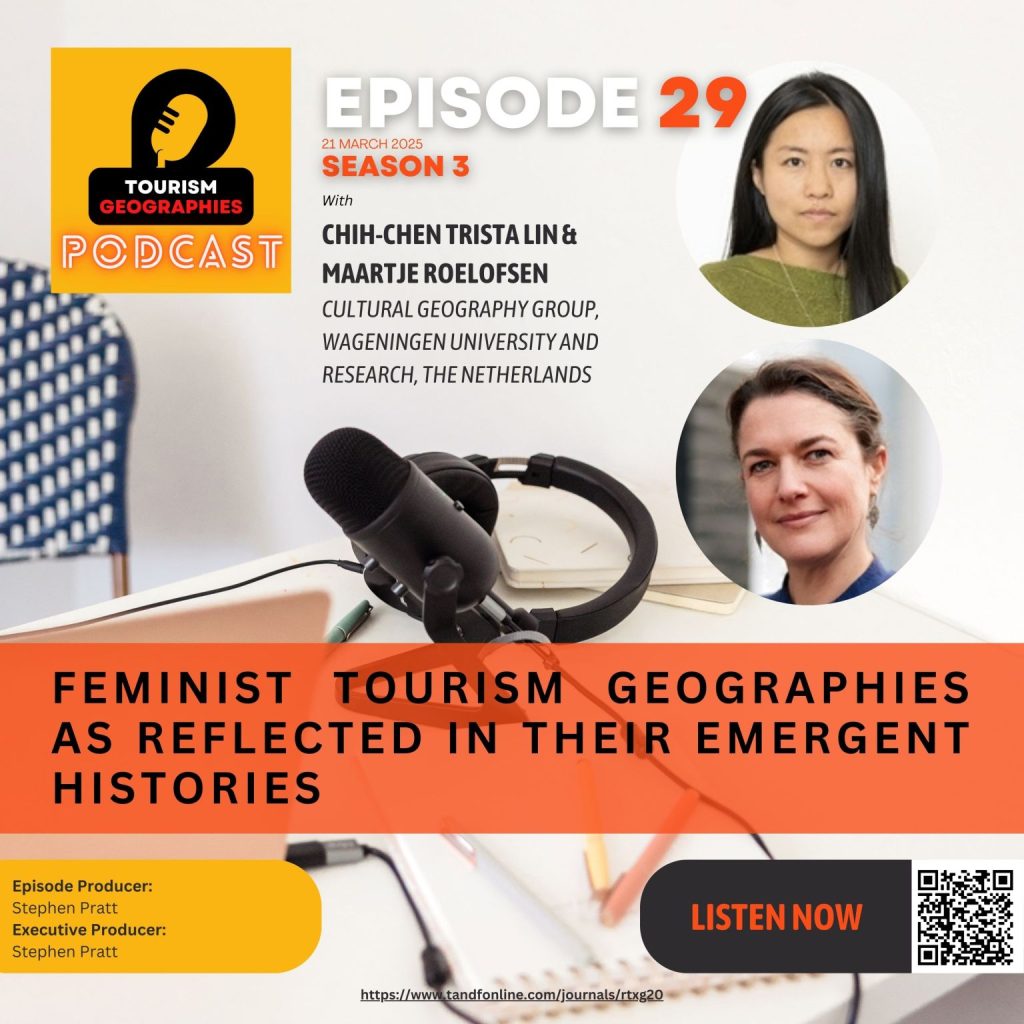
Much of this work is driven by feminist theory. Trista and I have been interviewed on related paper that was published in Tourism Geographies entitled “Feminist tourism geographies as reflected in their emergent histories”. The podcast can be found here https://shows.acast.com/tourism-geographiess-podcast/episodes/feminist-tourism-geographies-as-reflected-in-their-emergent-
The publication (open access) can be found here: https://doi.org/10.1080/14616688.2024.2381061
Other research projects, publications and presentations
My ongoing work on Virtual Reality technology in geography education with Richard Carter-White  from Macquarie University has seen another fruit. In the Annals of the Association of American Geographers we published our latest study on “Embodied encounters with Virtual Reality in geography education”. Through a qualitative study we investigated the subjective experiences of participants engaging in a series of VR field trips to sites of difficult heritage. We discuss the embodied dynamics at play in the course of VR field trips and how these media dynamics might affect equality of access and learning within geography curricula in higher education. The study is open access and available here: https://doi.org/10.1080/24694452.2025.2566740
During my earlier visit to Barcelona I also presented a study on social media, Twitter and misinformation in tourism together with Lluís Garay Tamajon at the Faculty of Economics and Business Research Day Presentation. The study was published in the Annals of Tourism Research Empirical Insights in 2024 already and is entitled “Tourism content on Twitter (X) during a crisis”. The paper (open access) can be found here: https://doi.org/10.1016/j.annale.2024.100132
Other memorable presentations that I gave in 2025 were:
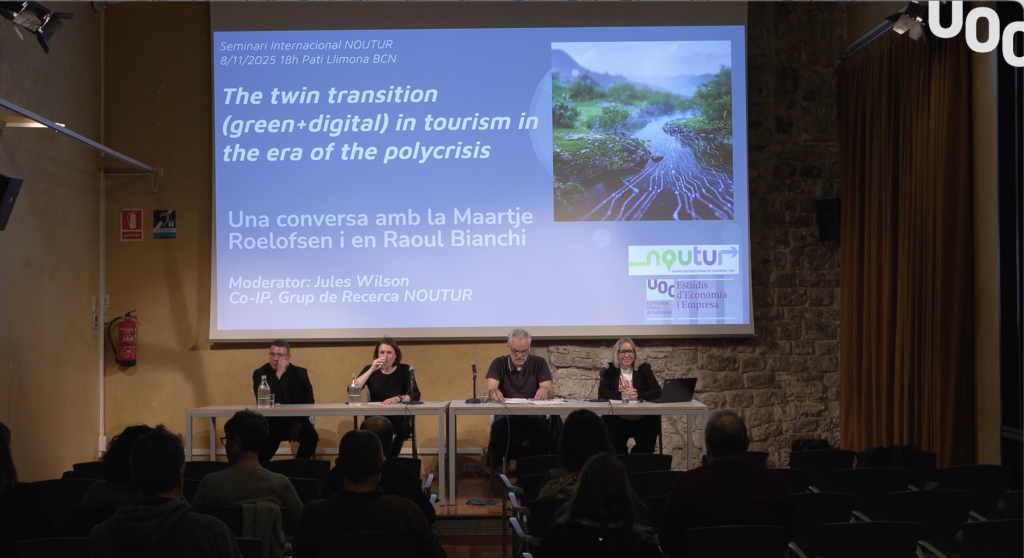
An invited seminar on “The Twin transition (green + digital) in tourism in the era of polycrisis” together with Dr. Raoul Bianchi at the Faculty of Economics and Business, Universitat Oberta de Catalunya, Spain. This presentation is related to the newly funded project TWINTUR, which aims to analyse how the digital and sustainable transitions, combined with the current polycrisis scenario, are transforming contemporary tourism. financed by the Spanish Plan Estatal de Investigación Científica y Técnica y de Innovación 2024-2027.
An invited presentation in the PhD Seminar Programme on “Turismo della memoria e patrimoni difficili. Tra materialità dei luoghi e rappresentazioni virtuali” at the University of Bologna, Italy. 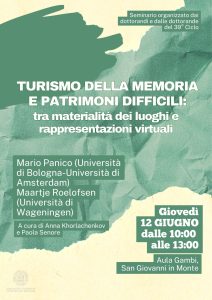 Together with Mario Panico, I spoke about the different practices of valorization of ‘difficult heritage’, sharing research carried out with Richard Carter-White on the role of Virtual Reality in the representation of heritage sites such as the Auschwitz State Museum, the Chernobyl Exclusion Zone, and the Hiroshima Peace Memorial Museum. Thanks for the invitation Anna Khorlachenkov!
I am very much looking forward to the new year and the changes ahead. Hope to see many of you again in person and wishing you all the best in 2026!